
How Are Peptides Synthesized? A Guide to Peptide Manufacturing and Laboratory Production
Helix Division · July 14, 2026
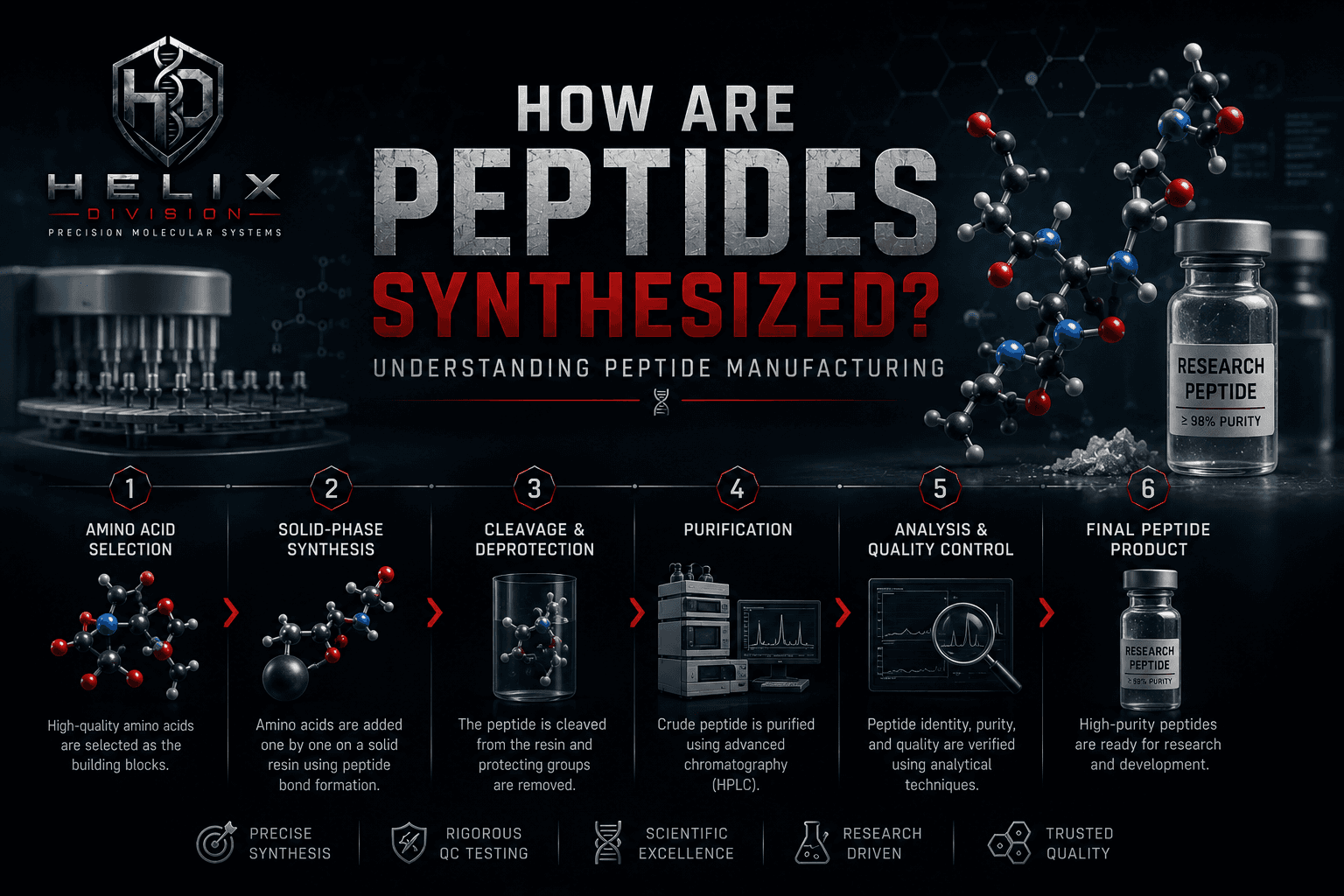
How Are Peptides Synthesized?
Introduction
Peptides occur naturally throughout living organisms, where they are assembled through complex biological processes. In laboratory research, however, scientists often require peptides with precise amino acid sequences and consistent analytical characteristics. To achieve this, peptides are synthesized using carefully controlled chemical methods.
Modern peptide synthesis has transformed biomedical research by allowing scientists to produce highly specific peptide sequences for laboratory investigation. These methods have enabled advances in molecular biology, biochemistry, immunology, neuroscience, and many other scientific disciplines.
This guide explains how peptides are synthesized, the methods commonly used in research laboratories, and the analytical steps that help characterize the finished material.
Quick Summary
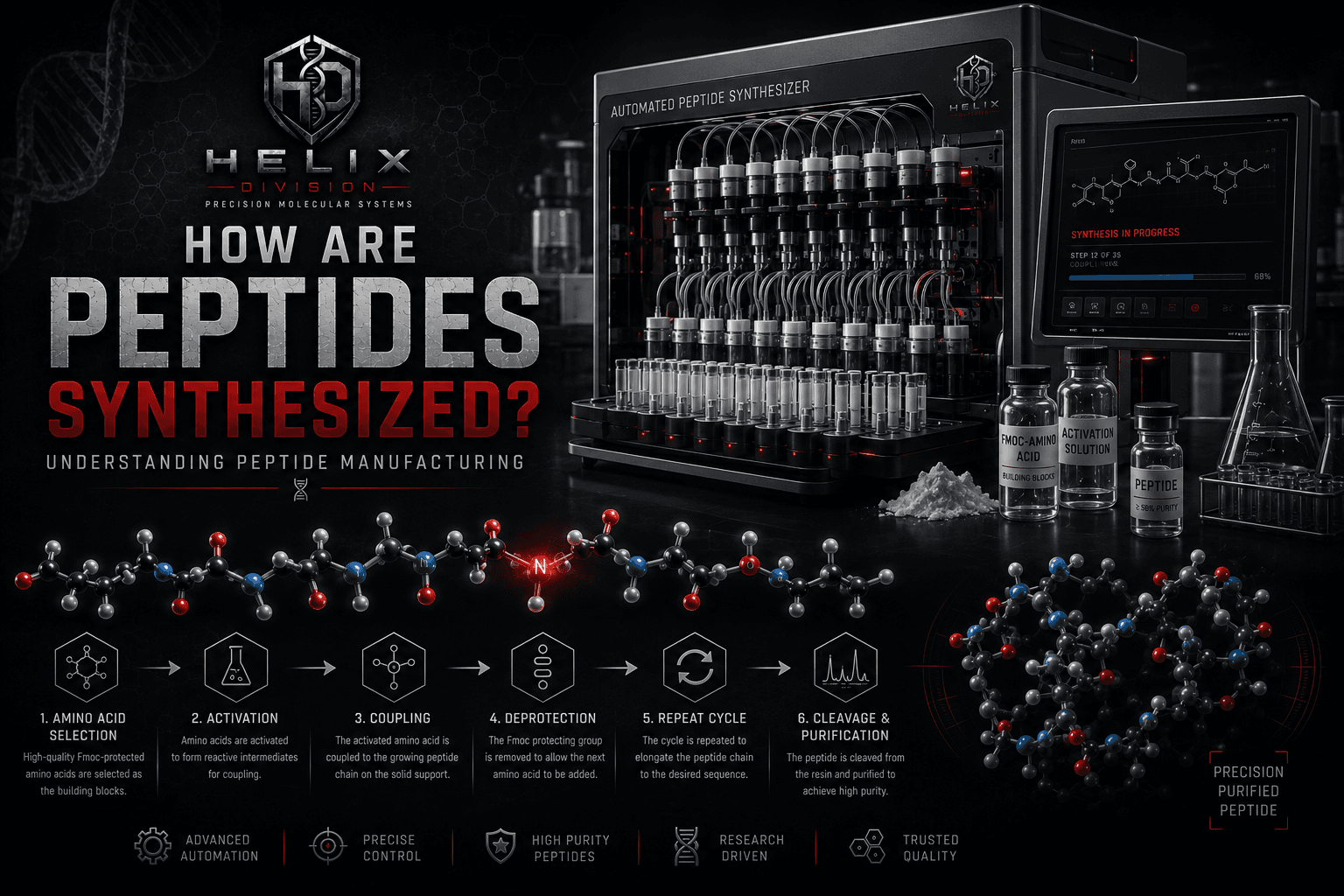
Peptide synthesis is the laboratory process of assembling amino acids into specific sequences using controlled chemical methods. Following synthesis, peptides are purified, analyzed, and characterized before being used in scientific research.
Table of Contents
-Why Scientists Synthesize Peptides
-What Is Solid-Phase Peptide Synthesis?
-Step-by-Step Overview
-Purification
-Analytical Characterization
-Challenges in Peptide Synthesis
-Frequently Asked Questions
Why Scientists Synthesize Peptides
Naturally occurring peptides are often present in very small quantities.
To study them effectively, researchers require reproducible materials with known amino acid sequences.
Laboratory synthesis allows scientists to:
-Produce defined peptide sequences
-Investigate molecular interactions
-Study receptor binding
-Explore biological signaling pathways
-Improve experimental reproducibility
What Is Solid-Phase Peptide Synthesis?
Today, most research peptides are produced using Solid-Phase Peptide Synthesis (SPPS), a method introduced by Robert Bruce Merrifield in the 1960s that transformed peptide chemistry.
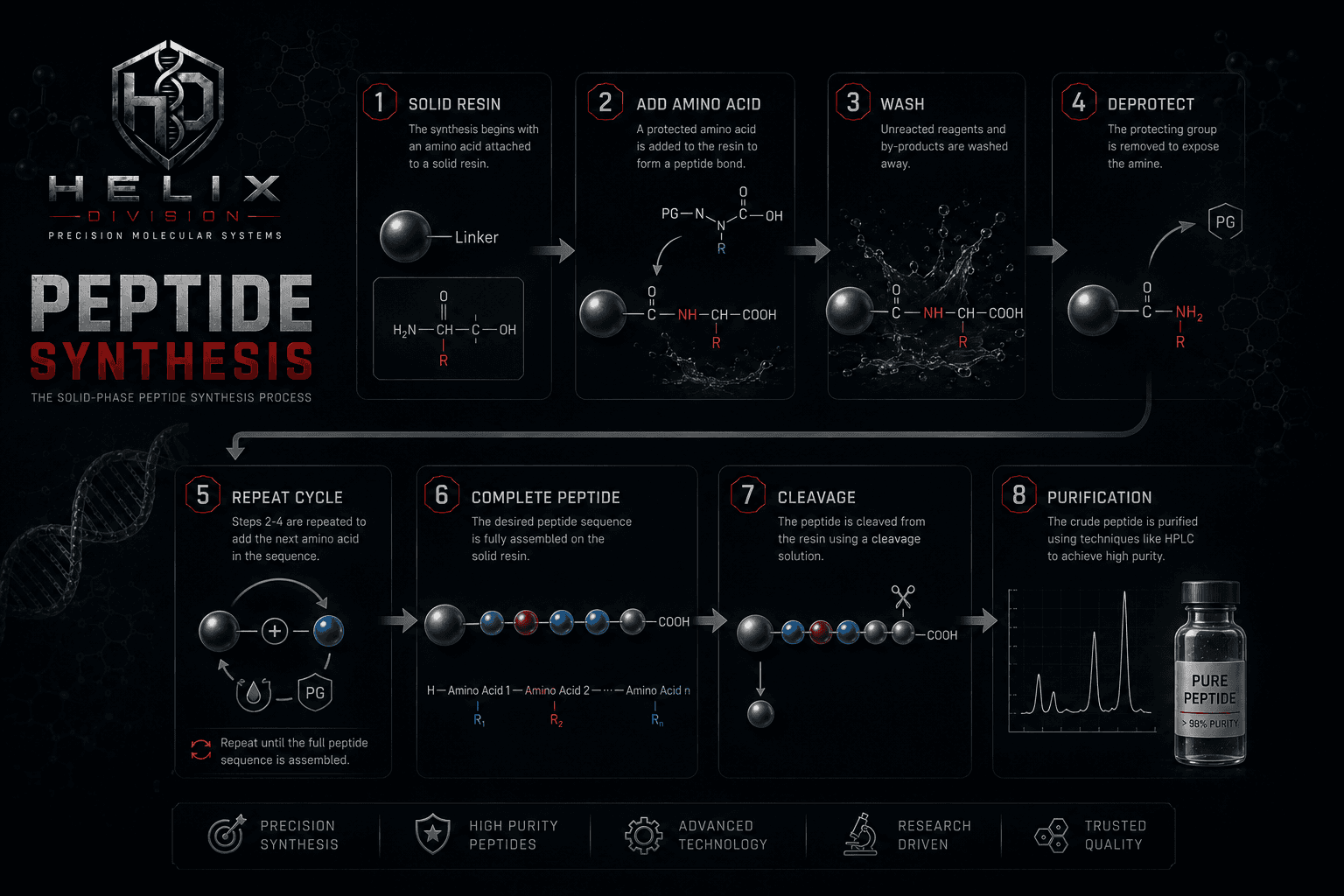
In SPPS, peptide chains are assembled one amino acid at a time while attached to a solid support. This approach simplifies purification during intermediate steps and enables the efficient construction of increasingly complex peptide sequences.
Step-by-Step Overview
Although procedures vary depending on the peptide, synthesis generally follows these stages:
1. Attachment
The first amino acid is attached to a solid resin.
2. Protection
Reactive groups are temporarily protected to help guide the desired chemical reactions.
3. Coupling
Additional amino acids are added sequentially to extend the peptide chain.
4. Deprotection
Protective groups are removed to prepare for the next coupling cycle.
5. Repetition
This sequence repeats until the target peptide has been assembled.
6. Cleavage
The completed peptide is separated from the solid support.
Purification
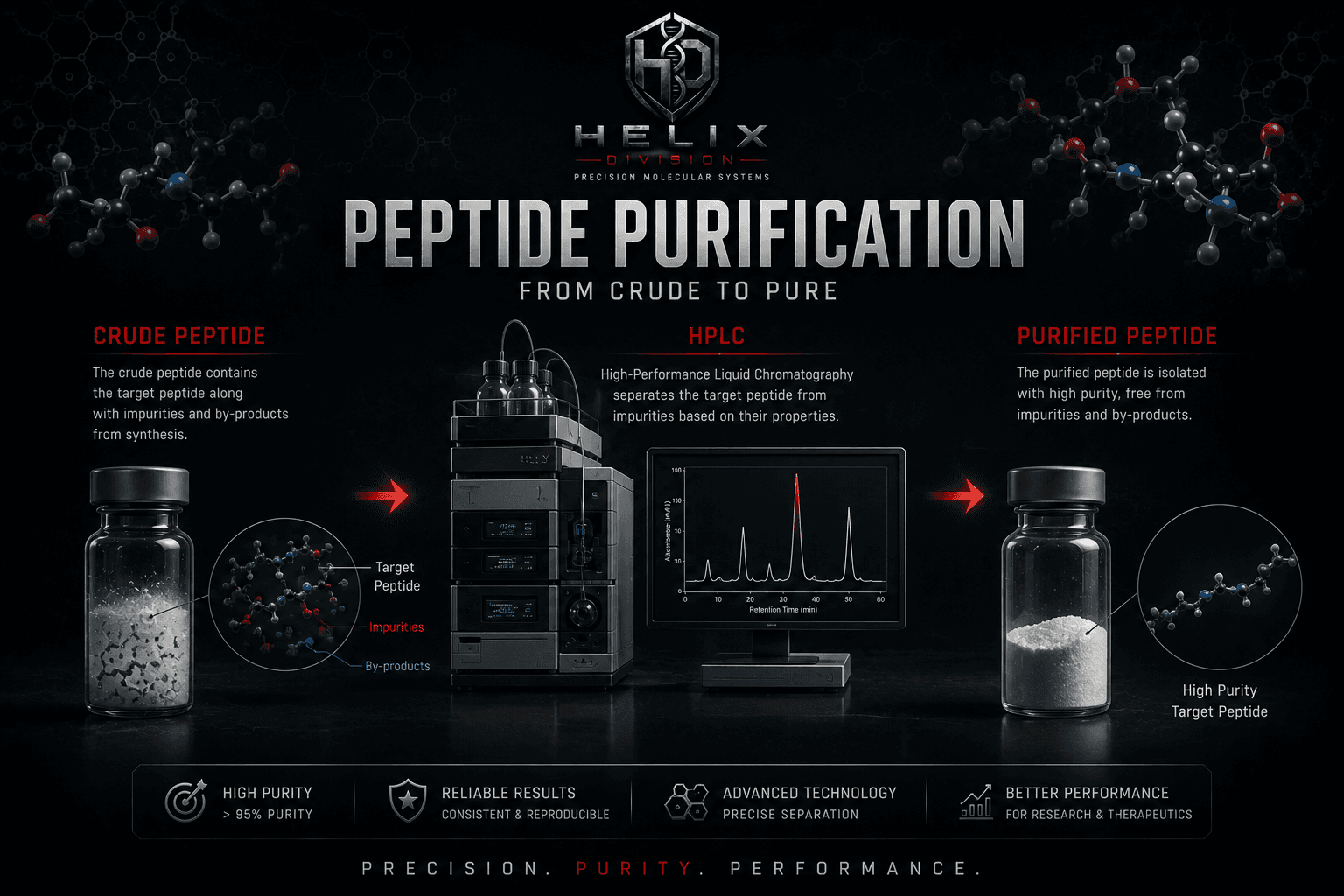
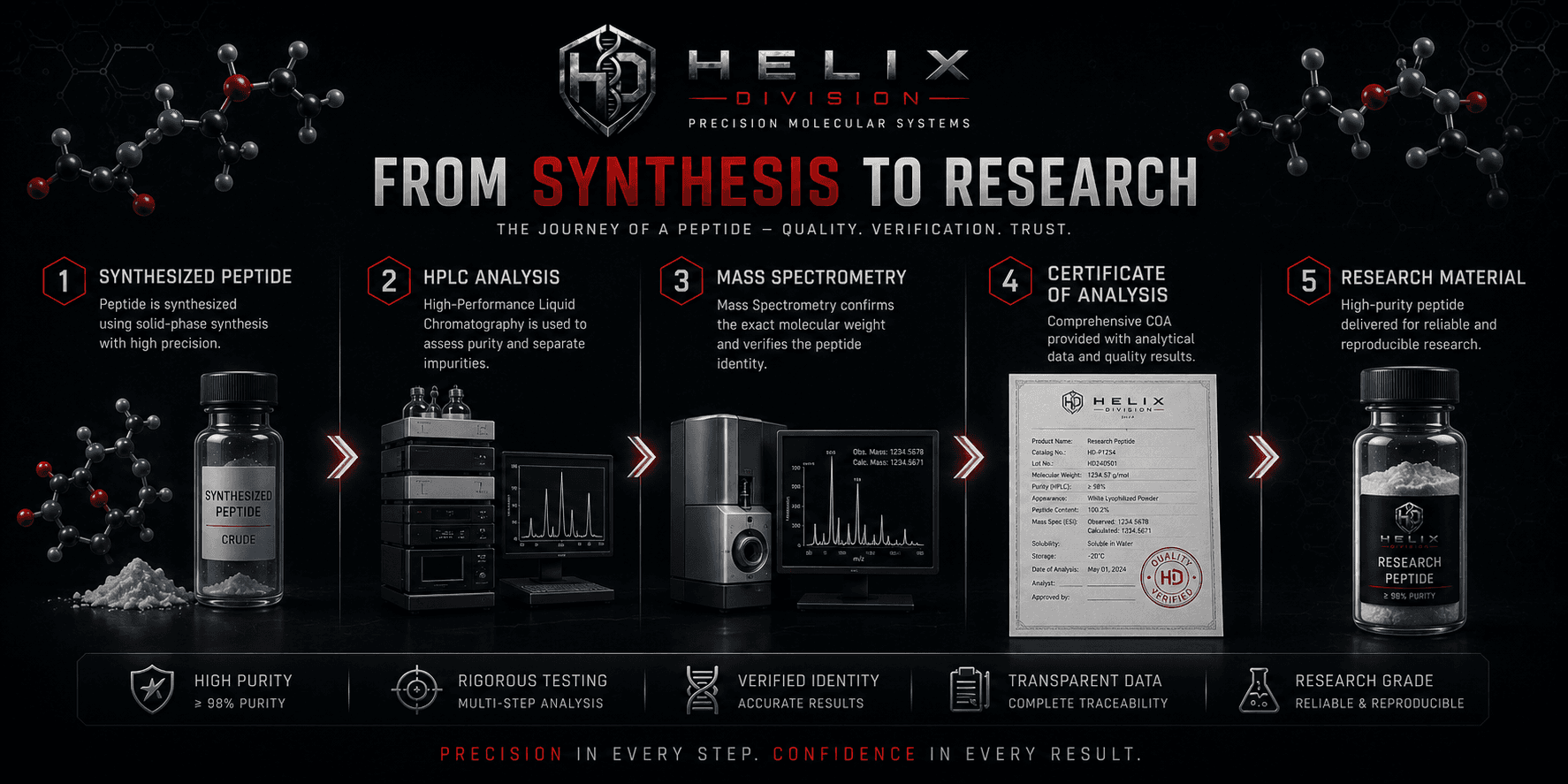
Following synthesis, the resulting material typically contains the intended peptide along with synthesis byproducts and incomplete sequences.
Purification methods, commonly including High-Performance Liquid Chromatography (HPLC), help separate the target peptide from other detectable components, producing material suitable for analytical characterization.
For more information, see our guide:
Understanding Research Peptide Purity Standards
Analytical Characterization
Once purified, peptides are characterized using analytical techniques that help verify their identity and composition.
Common analytical methods include:
-High-Performance Liquid Chromatography (HPLC)
-Mass Spectrometry (MS)
-Amino Acid Analysis
-Additional analytical techniques where appropriate
These methods provide complementary information regarding identity, purity, and batch consistency.
Challenges in Peptide Synthesis
Producing peptides with high analytical quality can present several challenges.
These may include:
-Incomplete coupling reactions
-Side reactions
-Sequence-dependent synthesis difficulties
-Oxidation
-Aggregation
-Stability during storage
Careful synthesis planning and analytical testing help researchers identify and manage these challenges.
Frequently Asked Questions
Why are peptides synthesized instead of extracted?
Laboratory synthesis enables researchers to produce defined peptide sequences with consistent characteristics, often in quantities suitable for scientific investigation.
What is Solid-Phase Peptide Synthesis?
Solid-Phase Peptide Synthesis (SPPS) is the most widely used laboratory method for assembling peptides one amino acid at a time on a solid support.
Why is purification necessary?
Purification helps separate the intended peptide from detectable synthesis byproducts and incomplete sequences, supporting reliable analytical characterization.
How do researchers verify synthesized peptides?
Scientists commonly use techniques such as HPLC and mass spectrometry to characterize peptide identity and composition.
Key Takeaways
-Most research peptides are produced using Solid-Phase Peptide Synthesis (SPPS).
-Peptides are assembled by sequentially adding amino acids.
-Purification and analytical characterization are important parts of the production process.
-HPLC and mass spectrometry provide complementary information about synthesized peptides.
-Careful laboratory methods support reproducibility in scientific research.
Related Articles
-What Are Research Peptides?
-What Is a Peptide?
-Understanding Research Peptide Purity Standards
-What Does "For Research Use Only" Mean?
-Certificates of Analysis (COAs) Explained (coming soon)
-Understanding In Vitro vs In Vivo Research (coming soon)
Conclusion
Modern peptide synthesis has become a cornerstone of biomedical research, allowing scientists to produce defined peptide sequences with remarkable precision. Combined with purification and analytical characterization, these methods support investigations into molecular biology, neuroscience, immunology, and many other scientific fields. Understanding how peptides are synthesized provides valuable context for interpreting peptide research and appreciating the rigorous laboratory processes behind these important research materials.
Disclaimer
This article is provided for educational and informational purposes only. It discusses peptide synthesis within the context of laboratory research and scientific investigation. It does not constitute medical advice or promote investigational compounds for human or animal use. Products referenced by Helix Division are intended for research use only and are not for human consumption.
Research use only. Content is educational and does not constitute medical advice or a claim of human or animal efficacy or safety. Products referenced are not for human consumption.