
Understanding Peptide Purity Standards
Helix Division · July 7, 2026
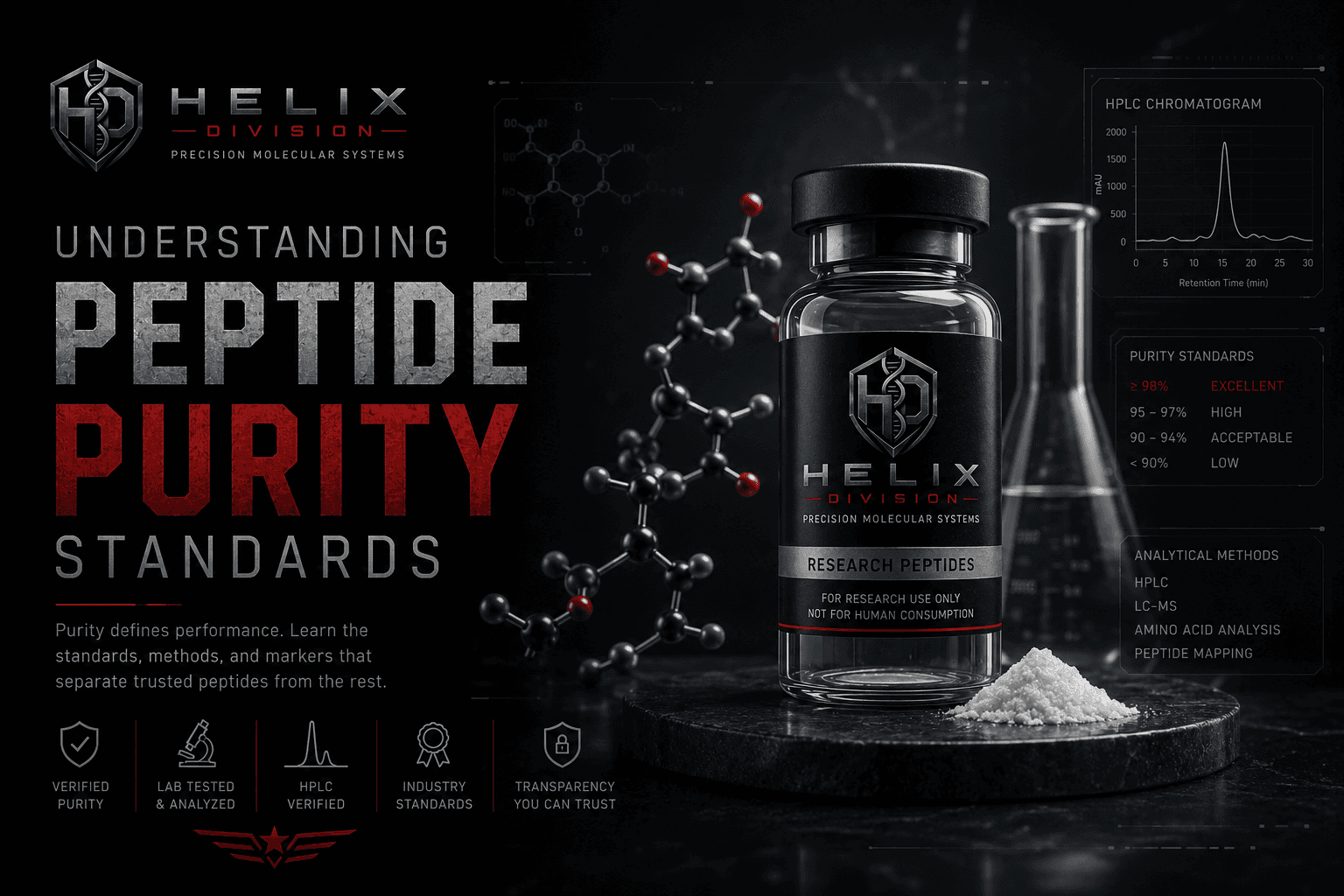
Understanding Research Peptide Purity Standards
The quality of any scientific investigation depends not only on experimental design but also on the integrity of the materials being studied. In peptide research, purity is one of the most important characteristics researchers evaluate before incorporating a compound into laboratory work. Purity testing helps determine how much of a sample consists of the intended peptide and whether measurable impurities are present. While no analytical method can guarantee perfection, well-characterized research materials contribute to more reliable, reproducible, and interpretable experimental results. This article explains what peptide purity means, why it matters in scientific research, the analytical techniques commonly used to assess peptide quality, and how researchers interpret Certificates of Analysis (COAs). Educational Notice: This article discusses peptide purity within the context of laboratory research and scientific quality control. It is intended solely for educational purposes and should not be interpreted as medical or therapeutic guidance.
What Does Peptide Purity Mean?
Peptide purity refers to the proportion of a sample that consists of the intended peptide sequence compared with other detectable substances. Those additional substances may include synthesis byproducts, incomplete peptide sequences, degradation products, residual reagents, or trace contaminants remaining from manufacturing. Purity is commonly expressed as a percentage determined through validated analytical testing. For example, a reported purity of 98% indicates that approximately 98% of the detectable material corresponds to the target peptide under the testing conditions used. It does not necessarily imply absolute chemical perfection or the absence of every possible impurity.
Why Purity Matters in Research
Scientific experiments rely on reproducibility. If a peptide sample contains significant impurities or inconsistent composition, researchers may find it difficult to determine whether observed results are caused by the intended peptide or by unrelated substances. High-quality analytical characterization helps researchers: Improve experimental consistency Reduce variability between batches Increase confidence when interpreting data Support reproducibility across studies Better understand the composition of research materials Because research outcomes often build upon previous experiments, material characterization plays an important role in maintaining scientific integrity.
Common Sources of Impurities
Peptides are produced through complex chemical synthesis involving multiple reaction steps. During manufacturing, several types of impurities may arise, including: Incomplete Sequences Occasionally, peptide chains may not reach the intended length during synthesis, resulting in shorter peptide fragments. Deletion Sequences Missing amino acids can create peptides that differ from the intended molecular structure. Oxidation Certain amino acids may undergo oxidation during manufacturing, storage, or handling, potentially altering the chemical composition. Residual Reagents Small amounts of chemicals used during synthesis or purification may remain if not adequately removed. Degradation Products Environmental factors such as moisture, heat, light, or repeated freeze-thaw cycles may contribute to gradual peptide degradation over time.
How Research Peptide Purity Is Evaluated
High-Performance Liquid Chromatography (HPLC)
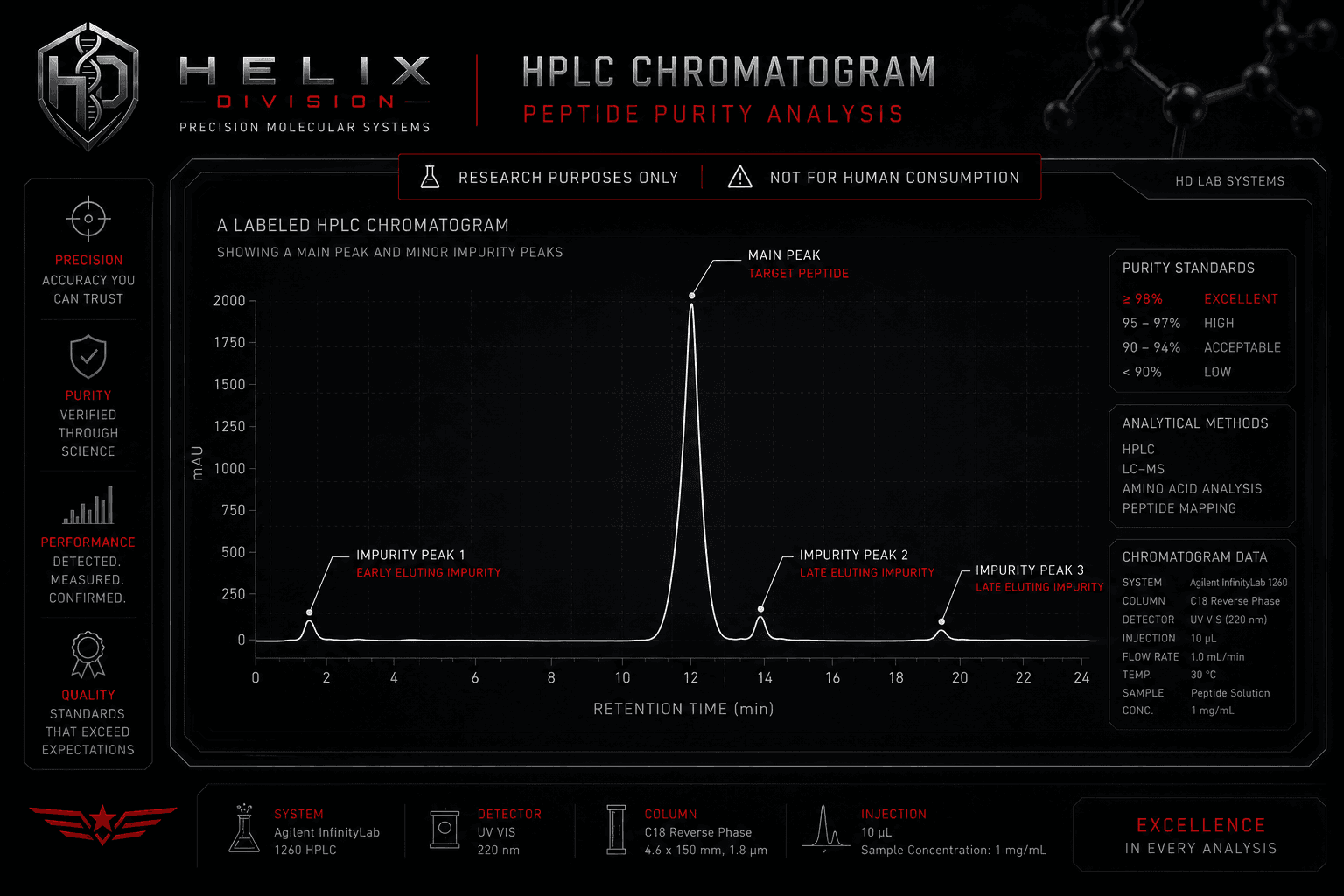
HPLC is one of the most widely used analytical methods for evaluating peptide purity. During HPLC analysis, compounds within a sample are separated based on their interactions with the chromatographic system. The resulting chromatogram displays peaks representing different components within the sample. The primary peak generally corresponds to the intended peptide, while additional peaks may represent detectable impurities or related compounds. HPLC is commonly used to estimate purity percentages and assess batch consistency.
Mass Spectrometry (MS)
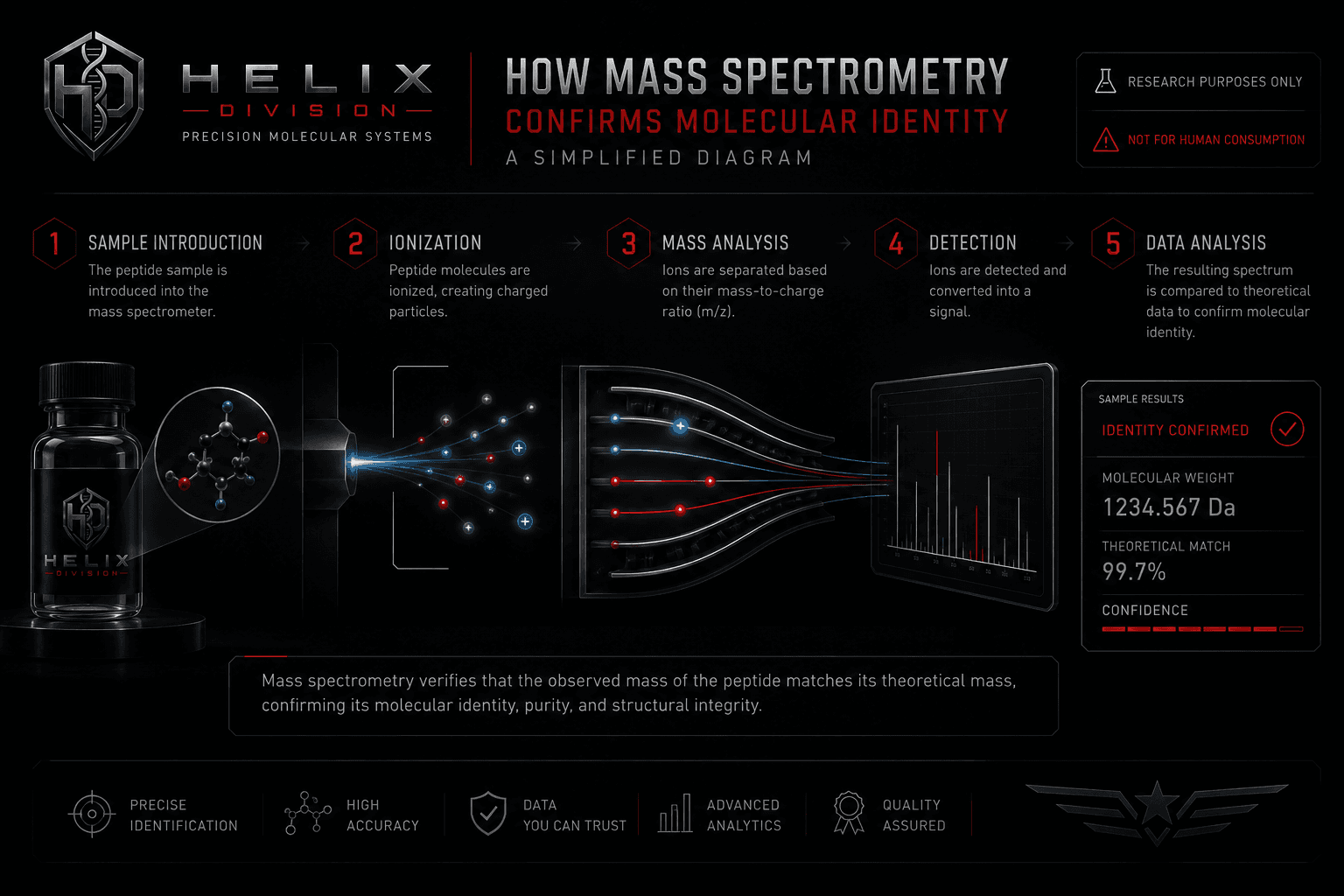
Mass spectrometry measures the molecular mass of compounds with high precision. Researchers use mass spectrometry to confirm that the detected molecular weight matches the expected peptide sequence. While HPLC evaluates separation and purity, mass spectrometry helps verify molecular identity. These two techniques are frequently used together to provide a more complete analytical profile.
Amino Acid Analysis
In some research settings, amino acid analysis may be performed to evaluate peptide composition and verify the expected amino acid content. Although not conducted for every batch, this technique can provide additional confirmation of peptide identity in certain applications.
Additional Analytical Methods
Depending on research requirements, laboratories may also employ techniques such as: Nuclear Magnetic Resonance (NMR) Capillary Electrophoresis (CE) Infrared Spectroscopy (IR) Elemental Analysis Moisture Analysis Residual Solvent Testing Each method contributes different information regarding the physical or chemical characteristics of the sample.
Understanding Certificates of Analysis (COAs)
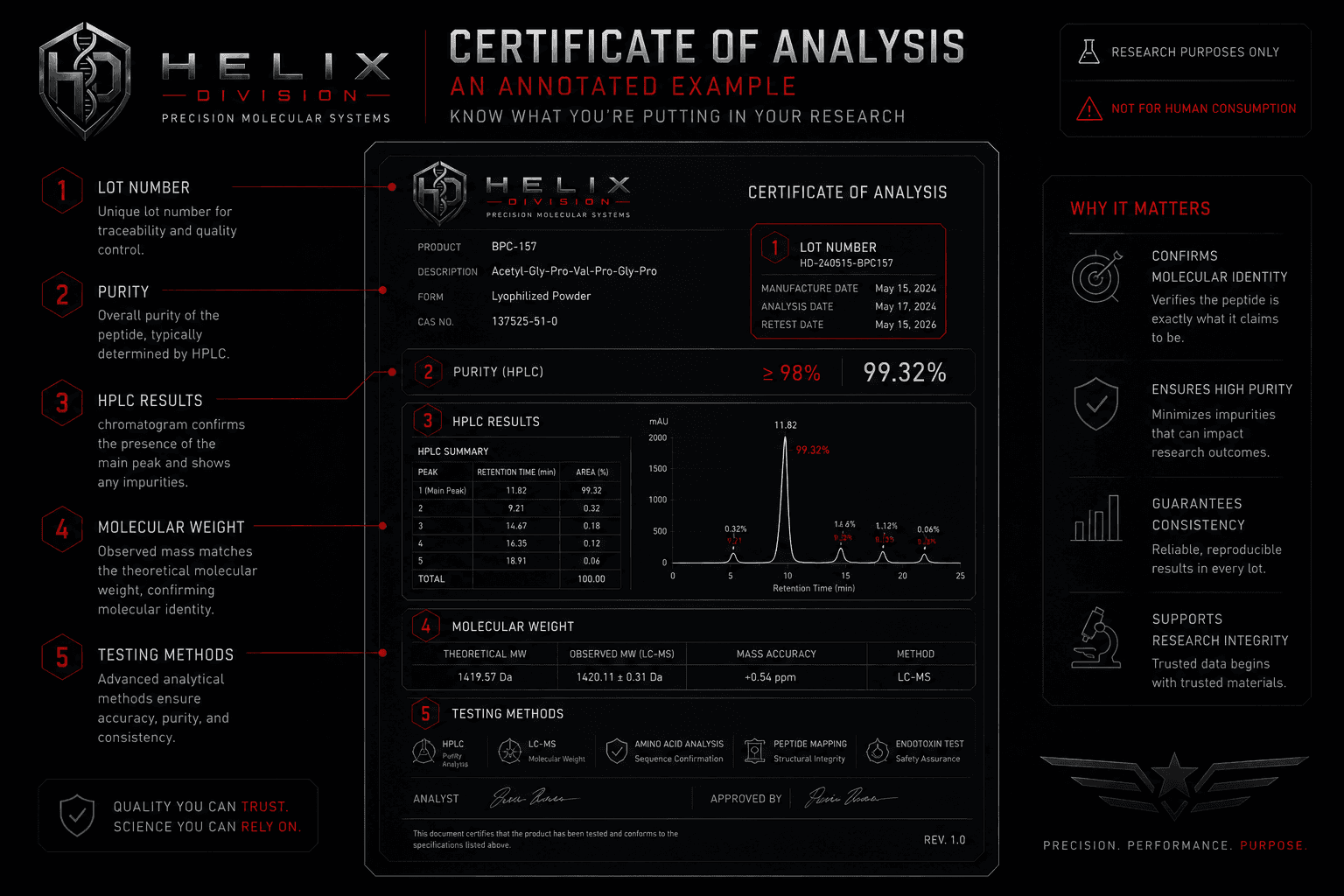
A Certificate of Analysis (COA) is a laboratory document summarizing analytical results for a specific production batch. Although formats vary between laboratories, a COA often includes: Batch or lot number Peptide identity Molecular weight Purity result Analytical method(s) used Chromatograms Mass spectra (where applicable) Manufacturing or testing date Storage recommendations (if provided) Researchers frequently review COAs alongside analytical data to understand how a material has been characterized.
Does a Higher Purity Percentage Always Mean Better Research?
Purity percentage is an important metric, but it should not be considered in isolation. Researchers often evaluate multiple quality attributes together, including: Identity confirmation Batch consistency Analytical documentation Stability information Storage conditions Laboratory quality systems A comprehensive quality assessment considers the overall analytical profile rather than relying solely on a single percentage.
Batch-to-Batch Consistency
Consistency between production batches is another important consideration in laboratory research. Analytical testing helps identify whether successive batches demonstrate similar purity profiles and molecular characteristics, supporting reproducibility across experiments.
Storage and Stability
Even well-characterized peptides may gradually change over time if exposed to unsuitable environmental conditions. Factors that may influence stability include: Temperature Moisture Oxygen exposure Light Repeated freeze-thaw cycles Appropriate storage practices help preserve sample integrity for research purposes.
Frequently Asked Questions
What does peptide purity percentage mean?
Purity percentage represents the proportion of detectable material corresponding to the intended peptide under the analytical conditions used. It should be interpreted alongside other analytical data rather than viewed as a standalone measure of overall quality.
Why is HPLC commonly used?
HPLC enables laboratories to separate components within a sample and estimate the relative amount of the target peptide compared with other detectable substances.
Why is mass spectrometry performed?
Mass spectrometry helps verify that the molecular mass of the analyzed compound corresponds to the expected peptide sequence.
Is purity the only indicator of quality?
No. Researchers also consider molecular identity, analytical documentation, batch consistency, stability, and other quality characteristics.
What is a Certificate of Analysis?
A Certificate of Analysis (COA) is a document summarizing analytical testing performed on a specific batch, including results such as purity, identity, and the methods used for characterization.
Key Takeaways
1) Peptide purity describes how much of a sample corresponds to the intended peptide relative to detectable impurities. 2) HPLC and mass spectrometry are commonly used analytical techniques for peptide characterization. 3) Certificates of Analysis provide batch-specific analytical information that supports transparency and reproducibility. 4) Purity should be interpreted alongside other quality metrics rather than in isolation. 5) Careful analytical characterization contributes to more reliable scientific research.
Disclaimer
This article is provided solely for educational and informational purposes regarding laboratory research. It discusses analytical testing and quality characterization of research peptides and does not promote or recommend the use of investigational compounds in humans. Nothing in this article should be interpreted as medical advice or as evidence of safety or effectiveness for human use.
Research use only. Content is educational and does not constitute medical advice or a claim of human or animal efficacy or safety. Products referenced are not for human consumption.